
Plumbers on Construction Sites: Managing the Safety Risks Behind the Trade
Plumbers are an essential trade on construction, renovation and maintenance projects. Their work ensures that water supply, drainage, sanitary systems, pipework, fittings, valves, geysers and related services are installed, repaired and maintained correctly. Without plumbers, buildings cannot function safely or hygienically.
However, plumbing work is often underestimated from a health and safety point of view. Many people see plumbing as a basic trade involving pipes, fittings and tools, but the work can expose plumbers to a wide range of risks. These include manual handling, sharp tools, hot work, pressure testing, working in ceiling voids, exposure to contaminated water, slips and trips, confined spaces, poor access, working at height and interaction with other trades.
Plumbers may work in difficult environments such as bathrooms, risers, trenches, roof spaces, service ducts, plant rooms, basements, wet areas and occupied buildings. The work may be physically demanding and often requires bending, kneeling, reaching, cutting, drilling, lifting and working in awkward positions.
Plumber safety must therefore be managed as a trade-specific issue. It is not only about wearing PPE or having a safety file. It is about understanding what plumbers actually do, what hazards they face, what can go wrong, and how those risks must be controlled on site.
|
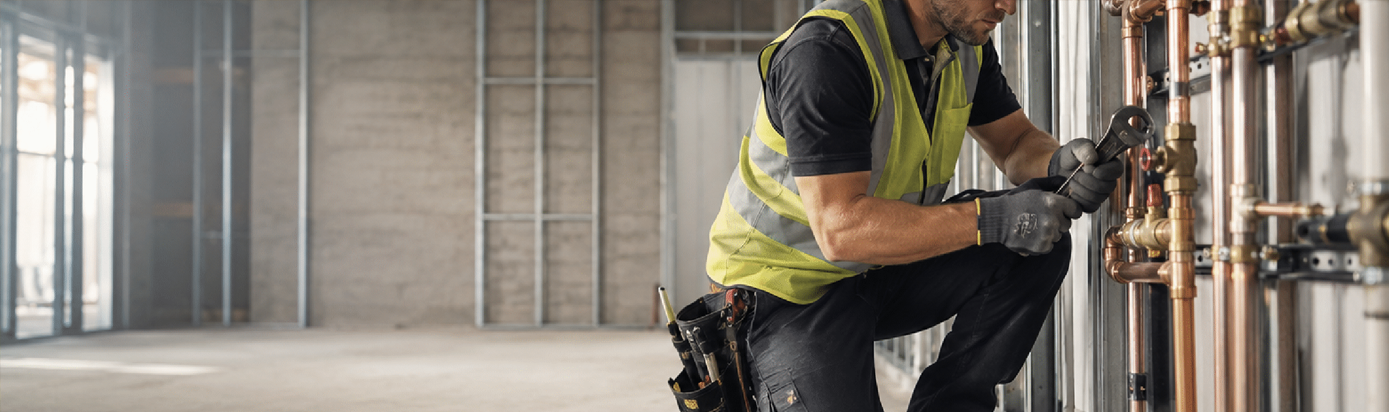
What Do Plumbers Do on Construction Sites? Plumbers carry out a wide range of tasks depending on the project stage and type of work being performed. Their duties may include installing water supply lines, drainage systems, sanitary fittings, valves, taps, basins, toilets, geysers, pumps, pipe supports and related plumbing equipment. They may also be involved in pipe cutting, threading, joining, welding, soldering, pressure testing, leak repairs, fault-finding, maintenance, replacement of damaged pipework and installation of new plumbing systems during construction or refurbishment. On construction sites, plumbers often work before finishes are installed, inside wall cavities, below floor level, above ceilings, in ducts, near electrical services, around other trades and in areas where access may be limited. In refurbishment work, they may also work around existing services, contaminated water, old pipework, live building systems and occupied areas. Because plumbing often involves water, pressure, heat, chemicals, tools and awkward work positions, proper planning and control are essential.
Common Hazards Faced by Plumbers Manual Handling and Ergonomic Strain Plumbing work can involve lifting and carrying pipes, fittings, tools, geysers, sanitary ware, pumps and equipment. Some items may be heavy, awkward or difficult to grip. Plumbers may also work in bent, kneeling or overhead positions for long periods. This can lead to back injuries, shoulder strain, knee pain, hand fatigue and long-term musculoskeletal problems. Cuts, Abrasions and Hand Injuries Plumbers frequently use hand tools, pipe cutters, grinders, drills, saws, spanners and sharp fittings. Pipes, brackets, metal edges and cut materials can cause cuts, punctures and abrasions. Hand injuries are common in plumbing because much of the work requires close hand contact with tools and materials. Exposure to Contaminated Water and Waste Plumbers may work on drainage systems, sewer lines, toilets, waste pipes, blocked drains or existing plumbing systems. This can expose them to contaminated water, sewage, bacteria, unpleasant odours and biological hazards. Without proper hygiene controls and PPE, workers may be exposed to infections, skin irritation and illness. Slips, Trips and Wet Floors Water leaks, wet surfaces, pipe offcuts, tools, hoses, cables and materials can create slip and trip hazards. Plumbing work often takes place in bathrooms, plant rooms, basements and other areas where water may be present. Wet floors can also increase the risk when using tools, carrying materials or working near electrical equipment. Hot Work and Burns Some plumbing tasks may involve soldering, brazing, welding, grinding, cutting or the use of heat-producing tools. These activities can expose workers to burns, fire risk, sparks, fumes and hot surfaces. Hot work must be properly controlled, especially where flammable materials, combustible finishes, ceiling voids or restricted spaces are present. Pressure Testing Risks Plumbing systems may be pressure tested to check for leaks and system integrity. If pressure testing is not properly controlled, pipes, fittings, caps or hoses can fail suddenly. This can cause flying components, water release, impact injuries and damage to property. Workers must understand the pressure involved and must not stand in the line of potential failure. Working in Ceiling Voids and Service Ducts Plumbers often work in ceiling spaces, risers and service ducts. These areas may have poor lighting, limited access, sharp edges, dust, heat, electrical services, weak ceiling boards and restricted movement. Workers may be at risk of falls, cuts, awkward posture, heat stress and contact with other services. Working at Height Plumbers may need to access elevated pipework, roof spaces, high-level valves, ceiling voids or overhead services. This may involve ladders, scaffolding, mobile towers or other access equipment. Falls can occur when workers overreach, use unsafe access, carry tools while climbing or work from unstable platforms. Contact with Electrical Services Water and electricity are a dangerous combination. Plumbers may work near electrical cables, DB boards, pumps, geysers, lighting, temporary power and other electrical services. Drilling, cutting or chasing near hidden electrical services can also create a serious risk of electric shock. Poor Housekeeping Plumbing work can create pipe offcuts, packaging, tools, fittings, water, dust and debris. If these are not managed, they can obstruct walkways and create slip, trip and fall hazards. Poor housekeeping can also affect other trades working nearby.
What Can Go Wrong? When plumbing safety is not properly managed, incidents can happen quickly. A plumber may strain their back while lifting a geyser or carrying long lengths of pipe. A worker may cut their hand on a sharp pipe edge or fitting. A leaking pipe may leave water on the floor, causing another worker to slip. A plumber working in a ceiling void may step onto an unsupported ceiling board and fall through. During pressure testing, a poorly secured fitting may fail and strike a worker. During hot work, sparks may ignite nearby combustible materials. A worker clearing a blocked drain may be exposed to contaminated water without proper gloves, eye protection or hygiene controls. A plumber may drill into a hidden electrical cable while installing pipe brackets. Poorly stored pipes may roll, fall or create a tripping hazard. Tools left in walkways may injure other workers. These incidents can lead to injuries, illness, damaged property, rework, delays, investigations and legal consequences. A plumbing task that appears simple can become high-risk if access, pressure, contamination, tools, water and other services are not properly controlled.
How to Prevent and Mitigate Plumber Safety Risks Plan the Plumbing Work Plumbing work should be properly planned before it starts. The work area, access, materials, tools, services, water isolation, drainage points, hot work requirements, pressure testing and interaction with other trades must be considered. A task-specific risk assessment and method statement should be prepared for the work. Workers must understand the hazards and controls before starting. Use Competent Workers Plumbing work must be carried out by workers who are competent for the task. They must understand the tools, materials, installation requirements, pressure risks, hygiene controls and emergency procedures linked to the work. Supervision is important, especially where work involves pressure testing, hot work, working at height, ceiling voids or existing services. Control Manual Handling Manual handling risks should be reduced as far as reasonably practicable. Heavy or awkward items such as geysers, sanitary ware, pumps and pipe bundles should be moved with assistance where required. Workers should avoid twisting, overreaching and lifting from poor positions. Materials should be stored close to the work area without blocking access routes. Use the Correct Tools and PPE Plumbers must use tools that are suitable for the task and in good condition. Damaged tools, worn blades, faulty grinders, damaged extension leads or incorrect equipment must not be used. PPE should be selected according to the task. This may include gloves, eye protection, safety footwear, hard hats, respiratory protection, hearing protection, face protection and protective clothing where required. Manage Cuts and Sharp Edges Cut pipe ends, metal edges and sharp fittings should be handled carefully. Where possible, sharp edges should be deburred or made safe. Workers should wear suitable gloves and use correct cutting methods to reduce hand injuries. Control Exposure to Contaminated Water When working on drainage, waste or sewer systems, plumbers must use suitable gloves, eye protection and protective clothing. Good hygiene is essential. Workers should wash hands properly after the task and before eating, drinking or smoking. Contaminated clothing and equipment should be cleaned or handled appropriately. Prevent Slips and Trips Water spills and leaks should be controlled as soon as possible. Wet areas should be cleaned, barricaded or marked where required. Tools, hoses, pipe offcuts and materials must be kept out of walkways. Good housekeeping should be maintained throughout the task, not only at the end of the day. Control Hot Work Where soldering, welding, brazing, grinding or other hot work is required, the area must be assessed before work starts. Combustible materials should be removed or protected. Fire extinguishers must be available where required, and workers must understand the fire risk. Hot work should not be carried out casually in ceiling voids, confined areas or near flammable materials. Manage Pressure Testing Safely Pressure testing must be planned and controlled. Workers must use suitable equipment, secure fittings, follow safe pressure limits and keep persons away from the line of potential failure. Only authorised workers should carry out or supervise pressure testing. Pressure should be released safely after testing. Provide Safe Access Where plumbers work at height or above ceilings, safe access must be provided. Ladders, scaffolding or mobile towers must be suitable, inspected and used correctly. Workers must not overreach, stand on pipes, climb on unstable structures or walk on unsupported ceiling boards. If the work cannot be reached safely, the access method must be changed. Identify Other Services Before drilling, cutting, chasing or fixing brackets, workers must check for existing services. This includes electrical cables, water lines, gas lines, fire services and other hidden installations. Where there is uncertainty, work should stop until the area has been confirmed safe. Maintain Good Housekeeping Plumbing work areas must be kept clean and organised. Pipe offcuts, packaging, waste, tools and fittings must be cleared regularly. Good housekeeping helps prevent trips, protects other trades and keeps the work area efficient. Communicate with Other Trades Plumbers often work near electricians, ceiling installers, tilers, builders and HVAC teams. Good communication is necessary where water isolation, hot work, ceiling access, shared workspaces or pressure testing may affect others. Other trades should be informed where plumbing work creates temporary hazards, wet areas or restricted access.
Legal Requirements Linked to Plumber Safety Plumber safety on construction sites is supported by the Occupational Health and Safety Act and applicable regulations. Section 8 of the Occupational Health and Safety Act requires employers to provide and maintain, as far as reasonably practicable, a working environment that is safe and without risk to employees. For plumbing contractors, this means identifying hazards, providing safe systems of work, maintaining tools and equipment, providing training and supervision, and enforcing safety measures. Section 9 requires employers and self-employed persons to conduct their work in a way that does not expose other persons to health and safety hazards. Plumbing work can affect other trades through wet floors, falling materials, pressure testing, hot work, blocked access and poor housekeeping. Section 13 requires employers to inform employees of the hazards linked to their work and the precautionary measures that must be followed. Plumbers must be informed about risks such as manual handling, contaminated water, pressure testing, hot work, working at height, electrical services and poor access. Section 14 requires employees to take reasonable care for their own health and safety and the safety of others. Plumbers must follow procedures, use equipment correctly, wear required PPE, cooperate with the employer and report unsafe conditions. Where plumbing work forms part of construction work, the Construction Regulations are also relevant. These regulations require proper planning, risk assessment, competent supervision, safe access, control of work areas, housekeeping, fall protection where required, and safe use of tools and equipment. The Environmental Regulations for Workplaces may also be relevant where housekeeping, lighting, ventilation, wet conditions, heat, dust or hygiene conditions affect worker safety. Where portable electrical tools are used by plumbers, electrical safety requirements must also be considered. Tools and leads must be inspected, protected from water, and removed from use if damaged.
Common Compliance Mistakes Made by Plumbing Contractors One common mistake is treating plumbing work as low risk because it is familiar. Plumbing involves water, pressure, tools, heat, manual handling and possible contamination, all of which must be controlled. Another mistake is failing to manage wet floors. Leaks or spills are sometimes left unattended, creating slip hazards for the plumber and other workers. Manual handling is often poorly controlled. Heavy fittings, geysers, pumps and pipe bundles may be lifted without assistance or planning. Hot work is sometimes carried out without proper fire control, especially in ceiling voids or near combustible materials. Pressure testing may be done without keeping workers clear of the danger area or without checking that fittings are properly secured. Another common issue is poor housekeeping. Pipe offcuts, tools, hoses and packaging are often left in walkways. Plumbers may also work in ceiling voids without checking safe access, lighting, electrical services or the strength of the surface they are working from.
Why Plumber Safety Matters to the Business Plumbing contractors play an important role in the progress and quality of a project. Poor plumbing safety can cause injuries, water damage, rework, delays, client complaints and legal exposure. A serious incident involving a plumber can stop work and affect other trades. A burst pipe, uncontrolled leak, fire from hot work or fall through a ceiling can damage property and create major project disruption. On the other hand, plumbing contractors who manage safety properly are seen as professional, reliable and competent. Safe work supports productivity, protects workers, reduces rework and improves client confidence. Plumbers are essential to construction and maintenance work, but their trade carries real safety risks. Manual handling, contaminated water, hot work, pressure testing, wet floors, ceiling voids, working at height, tools and hidden services must all be managed properly. Safe plumbing work requires planning, competent workers, correct tools, suitable PPE, safe access, good housekeeping, communication with other trades and proper supervision. When plumbing work is done safely, it protects workers, prevents damage and helps the project run smoothly.
Need Help with Plumbing Contractor Safety Compliance? Zenith Safety Consultants can assist plumbing contractors with health and safety files, risk assessments, method statements, legal appointments, toolbox talks, site inspections and practical construction safety support. Contact Zenith Safety Consultants to ensure your plumbing safety documentation and site controls are practical, compliant and suitable for the work being performed. Contact Zenith Safety Consultants to ensure your site documentation and safety practices are practical, compliant and suitable for the work being performed. For more information on how Zenith Safety Consultants can help your business, please contact us at This email address is being protected from spambots. You need JavaScript enabled to view it. or call 021 010 0209. |

 Talk to us!
